Trusted by Public Institutions for Over 45 Years.
THE FIVE THINGS A GOVERNMENT OFFICER ACTUALLY NEEDS FROM A PMC
DPACO is built to deliver — and built to stand behind every officer who selects it.
Government officers are accountable for every project they commission. DPACO understands this. Every engagement is structured with that accountability in mind — not just the project’s delivery.
01.
A 45-year track record in the same government departments you operate in.
You need a firm that understands the government approval process — not one that learns it on your project. DPACO has navigated every major Maharashtra government department across three policy cycles. The approval process, documentation requirements, ULB coordination protocols, and committee dynamics — these are institutional knowledge built over 45 years, not prepared during onboarding.
02.
Policy-grounded documentation — structured within the framework, not around it.
Most project reports are written to satisfy a checklist. DPACO structures DPRs and project documentation within the applicable policy framework — ensuring the project is compliant, the concession terms protect the public interest, and every document can withstand scrutiny from any authority.
DPACO’s policy understanding runs deep enough to identify gaps in the existing framework before they become project risks. Where the framework needs strengthening, DPACO drafts the additional instruments — Gadgets, GRs (Government Resolutions), and inter-departmental circulars — that formally establish what the project requires.
03.
A PMC that can reach your project site — not one that manages from a Mumbai office.
Mumbai-based consultancies are operationally weak beyond the metro. DPACO has regional coverage across Maharashtra — any project location, any district, reachable at short notice.
04.
Evidence, not claims, when your selection is questioned.
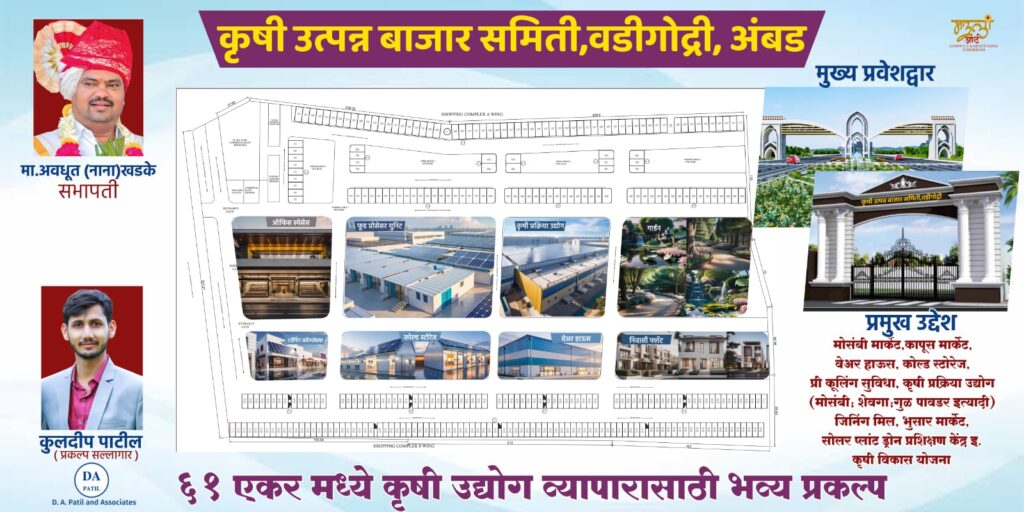
DPACO’s project history is documented, named, and verifiable. 20+ APMC projects. Named municipal council engagements. Specific empanelments. When you select DPACO, you select a firm whose credentials can be presented to any authority.
In the Udgir Municipal Council project, 3 PILs were filed against the project. The High Court penalised all three petitioners for wasting government time. The documentation held.
05.
Ground-level documentation before any proposal is submitted.
Before any proposal reaches a department, DPACO conducts ground-level documentation: DP remarks, TP remarks, and gram panchayat verification. Utilities mapping covers MSEB DP lines, MSEB transformers, pipelines, and eco-sensitive zone boundaries.
This ground work is not an add-on. It is what prevents proposals from failing on site conditions that were never checked.
WHAT THIS LOOKS LIKE IN PRACTICE
MSRTC PPP/BOT Latur Project, 2000
DPACO designed the PPP/BOT framework for an MSRTC pilot project in Latur in 2000. In 2003, MSRTC issued a final circular based on DPACO’s framework. That circular governed MSRTC’s PPP projects for over 21 years, until a 2024 Government Resolution amended the policy and extended the lease tenure of PPP projects from 30 to 60 years.
A pilot project that became a government circular. A circular that ran Maharashtra’s transport PPP framework for two decades. That is what technically and legally sound project design produces.
Udgir Municipal Council, 3 PILs Filed
In the Udgir Municipal Council project, 3 PILs were filed by opposition municipal council corporators challenging the project. The High Court dismissed all three petitions, with costs imposed on the petitioners for wasting court time.
A project that is technically and legally sound does not just withstand challenge. The challenge is dismissed.
Sugar Commissioner, Maharashtra, 1990
DPACO was appointed as the first private third-party quality auditor for the Commissioner of Sugar in Maharashtra in 1990, at a time when quality auditing on government infrastructure was entirely internal.
That appointment established a standard that the government chose to formalise through an independent party. DPACO was that party.
SCOPE OF ENGAGEMENT: GOVERNMENT SECTOR
What DPACO delivers for government bodies.
Policy & Project Structuring
The MSRTC bus stand BOT framework and Shetkari Bhavan scheme were both DPACO proposals adopted as government policy.
DPACO designs the financial and operational PPP or BOT model before a tender is published. This includes tender documentation, concession agreement, Viability Gap Funding and BOT/BOO framework design.
Full PMC from DPR to commissioning
Tendering, construction supervision, quality control, and handover managed end to end. Weekly site reports and MPR standard.
Relevant: Agriculture, APMC, NHM, Skill Development, Planning.
Gadgets, GRs, inter-departmental circulars
Where the existing policy framework creates obstacles for a project, DPACO drafts the instruments needed to amend it — Gadgets, GRs (Government Resolutions), and inter-departmental circulars.
Policy amendment is not just pre-tender work. DPACO applies these instruments during project execution as well, addressing gaps in the framework even after policy has been established.
Cross-department projects, existing relationships
Infrastructure projects spanning departments — a transport hub involving PWD, MSRTC, and Municipal Council — require a PMC with existing relationships. DPACO has active empanelments and working relationships with 9+ Maharashtra government departments.
Fast government fund approvals
STP, solid waste management, compressed biogas, and solar — structured as bankable PPP projects for municipal and government clients.